In partnership with

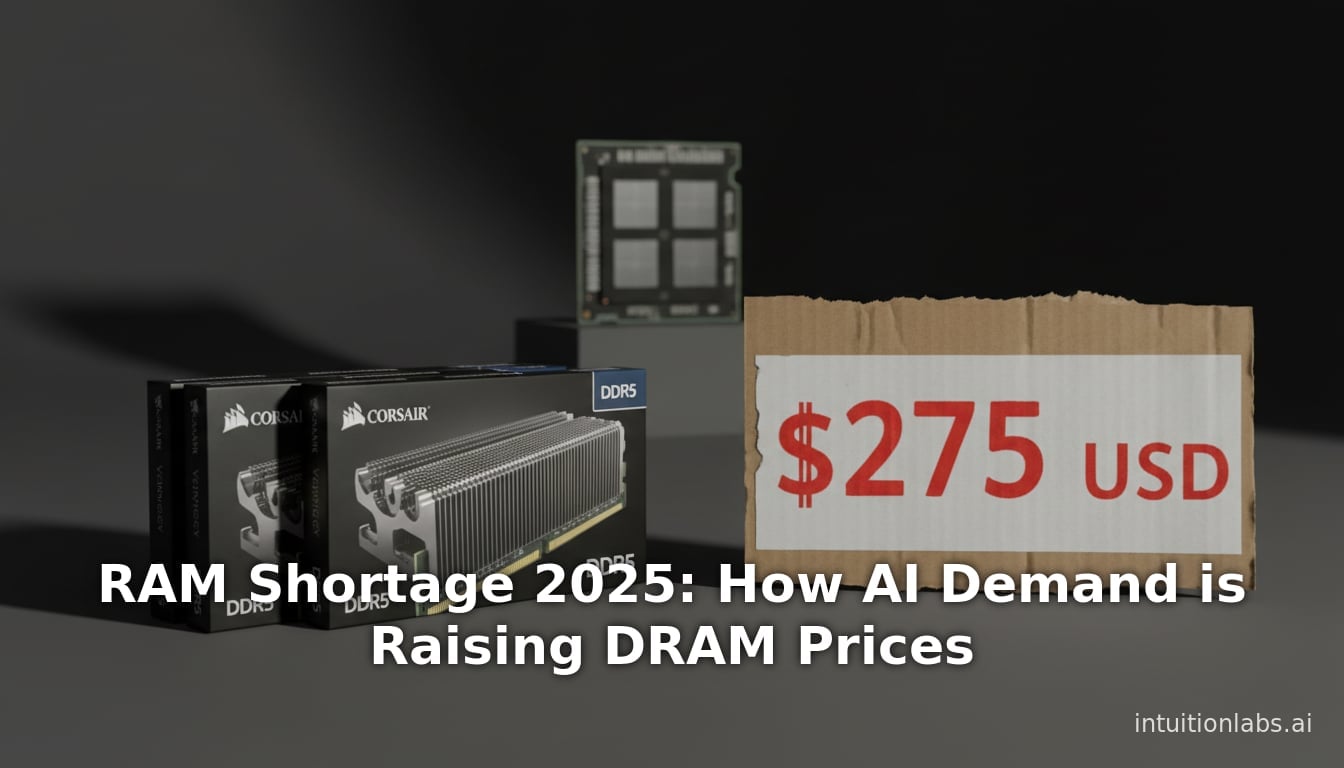
Memory manufacturers face a structural shortage driven by permanent capacity reallocation toward high-bandwidth memory for AI infrastructure. HBM production consumes three times the wafer area of conventional DRAM per bit and requires advanced packaging that only three firms possess. Fabs cost 15 to 20 billion dollars and take 24 to 36 months to build. The shortage is mispriced as cyclical when it represents a regime shift in silicon allocation. Consumer electronics face rationing through at least 2027.
I. Context
Three firms control memory production: Samsung holds the largest capacity, SK Hynix leads in technology, Micron represents the sole Western producer.
AI training nodes deploy multiple terabytes of HBM versus 512 gigabytes of DDR5 in conventional servers. This is not marginal product mix adjustment but fundamental reallocation of the same constrained input.
By Q4 2025, spot DRAM prices increased 170 percent year-over-year. Contract prices rose 50 to 60 percent in one quarter. Distributor inventories fell from 13 weeks to under four weeks. Micron exited consumer brands to focus on enterprise and AI.
The rate at which AI infrastructure absorbs memory exceeds the rate manufacturers can expand wafer output.
The Future of Shopping? AI + Actual Humans.

AI has changed how consumers shop by speeding up research. But one thing hasn’t changed: shoppers still trust people more than AI.
Levanta’s new Affiliate 3.0 Consumer Report reveals a major shift in how shoppers blend AI tools with human influence. Consumers use AI to explore options, but when it comes time to buy, they still turn to creators, communities, and real experiences to validate their decisions.
The data shows:
Only 10% of shoppers buy through AI-recommended links
87% discover products through creators, blogs, or communities they trust
Human sources like reviews and creators rank higher in trust than AI recommendations
The most effective brands are combining AI discovery with authentic human influence to drive measurable conversions.
Affiliate marketing isn’t being replaced by AI, it’s being amplified by it.
II. Structure and Incentives
A memory fab costs 15 to 20 billion dollars and requires 24 to 36 months from groundbreaking to production. Total industry DRAM capacity sits near 2.5 million wafers monthly.
HBM consumes three times the wafer area of DDR5 per bit due to smaller dies optimized for vertical stacking. HBM3E yields range between 50 and 60 percent for 12-layer stacks. HBM4 requires thinner wafers and tighter tolerances, lowering initial yields further.
Only SK Hynix and Samsung operate high-volume HBM packaging at scale. Micron brings Singapore capacity online in 2027. This creates a secondary bottleneck independent of wafer production.
HBM commands prices 5 to 8 times higher than equivalent DDR5 capacity. Gross margins exceed 60 percent versus 40 percent for commodity DRAM. Samsung allocated 30 percent of capacity to HBM in 2025, projecting 40 percent by 2027. SK Hynix operates similar ratios. Micron sold out 2026 HBM production before year-end.
Every wafer directed to HBM represents 2.5 wafers of conventional DRAM not manufactured. As capacity shifts toward AI, supply for consumer electronics contracts in absolute terms. This is reallocation, not expansion.
Government subsidies alter timing but not physics. Micron received 6.2 billion in direct funding and 7.5 billion in loans under the CHIPS Act. Facilities still require 24 to 48 months to reach volume production. SK Hynix and Samsung receive similar support from South Korea.
III. The Mispricing or Tension
Markets price the shortage as cyclical imbalance that self-corrects through capacity expansion and demand normalization. Equity valuations embed assumptions about margin compression.
SK Hynix accelerated its M15X fab to begin HBM4 production in February 2026, four months early. This delivers 10,000 wafer starts monthly initially, ramping to 50,000 by late 2026. Micron's Idaho fab targets mid-2027. Samsung plans 50 percent HBM capacity increase in 2026.
These represent maximum-speed responses with full capital access and government support. They add tens of thousands of monthly wafers against demand measured in hundreds of thousands.
OpenAI alone placed orders representing 900,000 DRAM wafers monthly. Major cloud providers committed to multi-year capital programs totaling hundreds of billions. Demand growth may outpace supply additions through the decade.
Price signals fail to generate meaningful supply response because the response function is broken. Only three firms possess the required combination of process technology, packaging, and scale. New entrants face 5 to 10 year timelines and tens of billions in capital. Chinese manufacturers operate generations behind and face export restrictions. No plausible competition emerges before 2030.
Memory manufacturers increased combined 2026 capex to approximately 50 billion from 30 billion in 2024. New fabs deliver output in 2027 and beyond. The price mechanism works, but slowly.
Memory transitioned from commodity input priced near marginal cost to strategic constraint determining AI deployment rates. The industry optimized for cost reduction and volume. It now optimizes for performance per watt and bandwidth density. This is structural reallocation, not cyclical volatility.
IV. Second-Order Implications
Memory now represents 20 percent of PC bill of materials, up from 10 to 15 percent. Laptop and desktop pricing increased 15 to 20 percent in late 2025. Smartphone manufacturers warned of similar adjustments for 2026.
Large buyers secure multi-year supply agreements at negotiated prices. Smaller manufacturers access residual supply at spot pricing with higher volatility. Market power in procurement becomes competitive advantage independent of product quality.
NAND prices increased over 60 percent for some categories as manufacturers retired older process nodes. Storage follows memory into enterprise reallocation.
Each new HBM generation introduces constraints before existing ones resolve. HBM4 requires thinner wafers and tighter tolerances. HBM5 adds packaging complexity. Process transitions reduce yields and slow ramps temporarily.
Alternative architectures receive attention but face barriers. Some designers explore DDR5 configurations accepting bandwidth tradeoffs for availability. Emerging technologies lack manufacturing scale and cannot displace HBM within relevant timeframes.
With 2026 production sold out, manufacturers gain pricing power in 2027 negotiations. Supply agreements increasingly include take-or-pay provisions. Memory procurement shifts from spot purchasing to strategic partnerships resembling utility contracts.
As manufacturers convert older fabs or retire legacy capacity, supply of mature process nodes contracts. Automotive suppliers report extended DDR4 and LPDDR4 lead times. This creates secondary shortages in products not competing directly with AI.
V. Constraints and Limits
Fab construction faces delays from permitting, equipment delivery, and process qualification. Micron's New York fab now targets 2030 for initial production, delayed from late 2020s. Fabs achieving first wafer output on schedule still require 12 to 18 months of yield improvement before reaching design capacity.
AI demand could moderate if model scaling encounters diminishing returns or enterprise adoption disappoints. Capital commitments made in 2025 and 2026 lock in supply increases through 2028, creating oversupply risk if demand peaks early.
Process technology transitions may not deliver expected improvements. High numerical aperture EUV tools remain early in deployment with limited experience. Yield or reliability issues could limit effective capacity increases.
Memory manufacturing depends on equipment from ASML, Applied Materials, and Tokyo Electron. Export controls or supply chain disruptions could delay construction or limit ramps. Most capacity additions through 2027 remain concentrated in South Korea and Taiwan.
Three-player oligopoly creates coordination risk. Any operational issue at a major facility affects global supply meaningfully. Samsung and SK Hynix concentrate production in South Korea. Micron operates at smaller individual scale across multiple regions.
The memory market remains ultimately cyclical. Manufacturers adding capacity in 2026 and 2027 may face oversupply if AI demand peaks before facilities reach volume production.
VI. Synthesis
Wafer capacity limits production volume. HBM architecture consumes wafers at triple the rate of conventional products. Advanced packaging creates a secondary ceiling. Only three manufacturers operate at the intersection of all required capabilities. All three redirected capacity toward high-margin AI products.
The shortage persists because response function measures in years while demand operates in quarters. Capacity additions announced in 2025 deliver output in 2027 and beyond. Fastest possible expansion cannot converge with demand before late decade absent demand slowdown.
Memory transitioned from cost-optimized commodity to performance-constrained strategic input. AI infrastructure buyers prioritize performance and availability over price, creating incentives that prevent manufacturers from serving consumer markets at previous volumes.
Capacity eventually expands and constraints ease, likely in 2027-2028 if construction proceeds on schedule and AI demand moderates. Until then, memory remains the binding constraint on multiple technology sectors.
—
This analysis is for educational purposes. It does not constitute investment advice or a recommendation to buy or sell any security. Investors should conduct their own due diligence and consult financial advisors.
Sources: