Receive the Sunday Brief — a weekly snapshot of markets, signals, and themes.
Jensen Huang, CEO of NVIDIA, has said that autonomous vehicles are on track to become the first multi-trillion-dollar robotics industry — an assertion that reflects the scale of economic transformation embedded in self-driving technology and autonomous mobility. Autonomous vehicles span passenger robotaxis, delivery fleets, and even trucking, collectively rewriting how transportation and logistics could function in a future where human drivers become increasingly peripheral.
In that macro context, Uber occupies a unique position. Historically, Uber built a global ride-hailing and delivery platform that aggregates demand, manages dispatch, and orchestrates a flexible supply of drivers and riders. It never sought to become a hardware manufacturer, and its foray into developing its own autonomous technology was wound down after early setbacks. Yet today, Uber is pivoting from developing autonomy to integrating it, transforming the company into a potential key bridge between autonomous vehicle (AV) providers and the millions of users who rely on ride-hailing and food delivery every day.
Uber’s CEO Dara Khosrowshahi has explicitly framed robotaxis as a “trillion-dollar-plus” business opportunity, with plans to expand autonomous operations into multiple markets globally, including segments in the Asia-Pacific region where demographics and regulatory momentum may support accelerated adoption.
Want to take advantage of the current bull run?
If you want to take advantage of the current bull market but are hesitant about investing, online stock brokers could help take the intimidation out of the process. These platforms offer a simpler, user-friendly way to buy and sell stocks, options and ETFs from the comfort of your home. Check out Money’s list of the Best Online Stock Brokers and start putting your money to work!
Uber’s Platform Model and Autonomous Integration
Uber’s positioning in the autonomy landscape is defined less by building the technology itself and more by providing the marketplace, routing, payments, and customer experience layer that any successful autonomous fleet will need. Rather than competing directly with autonomy vendors on hardware or software development, Uber has pursued partnerships with a range of technology providers including NVIDIA, Waymo, and others.
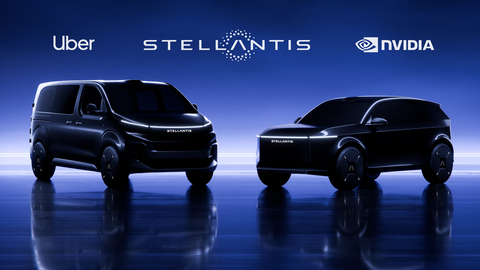
One of the clearest examples of this strategy is Uber’s collaboration with NVIDIA to create a framework for deploying autonomous vehicles at scale. In this collaboration, NVIDIA’s AI compute architecture and software stack are positioned as the backbone for autonomous fleets, while Uber’s platform provides the demand and operational layer that ties those vehicles into real-world usage.
This framework is intended to be agnostic to specific AV developers, spanning passenger mobility and autonomous logistics, and signals that Uber is aiming to be the connective tissue in an ecosystem with multiple hardware and software players.
Further evidence of this integrative position is found in Uber’s expanded network partnerships. For example, Waymo — Alphabet’s autonomous ride-hailing unit — has already enabled fully autonomous ride requests through the Uber app in cities such as Austin and Atlanta. That partnership represents a tangible early instance of how Uber’s platform can serve as the demand interface for autonomous fleets developed externally.
In addition to Waymo, Uber has announced plans to expand its autonomous and robotaxi initiatives with a variety of partners, including deploying significant numbers of Level 4 vehicles through collaborations that include NVIDIA-powered platforms, automakers such as Stellantis, and self-driving technology companies. This includes commitments to expand robotaxi and autonomous delivery fleets and leverage the expertise of multiple AV developers.
Uber’s Strategic Benefits in the Autonomous Shift
Uber’s advantage in this transition stems from three structural characteristics:
1. Demand Aggregation at Global Scale
Uber manages a massive global network of riders and delivery users that spans hundreds of cities. Autonomous fleets — whether robotaxis or delivery bots — will be most valuable when they are efficiently matched with demand at scale. Uber’s existing marketplace accomplishes that matching today with humans; in the future, it can do the same with autonomous vehicles.
2. Neutral Platform Positioning
Unlike companies developing their own autonomous systems (e.g., Waymo or Tesla), Uber does not have a single proprietary AV stack it is trying to push. Instead, it works with multiple developers, positioning itself as a neutral joystick for autonomy that can integrate diverse technologies into its service offerings. This neutrality may prove valuable as the autonomy ecosystem evolves, keeping Uber relevant regardless of which vendors or regional players gain traction.
3. Operational Expertise and Infrastructure
Operating autonomous vehicles at scale requires not just the vehicles themselves, but charging, maintenance, routing, customer support, and regulatory compliance. Uber already manages a robust operating network for its human drivers, and that experience — along with its global operational footprint — can translate into a competitive advantage for managing autonomous fleets, even though different skill sets are required.
Current Market Signals and Uber’s Positioning
Even as Uber stands to benefit from autonomous integration, it is worth noting that some aspects of autonomous mobility remain years from mainstream profitability. While partnerships and deployments are progressing, companies like Waymo continue to expand their own autonomous ride-hailing services, and Tesla and others are pursuing autonomous offerings under different models.
Uber’s stock valuation reflects both these opportunities and uncertainties. Historically, the company’s margins have been influenced by the cost of human drivers — a dynamic that autonomous vehicles could materially change if they significantly reduce dependence on human labor over time.
However, current commercial scale remains limited and regulatory requirements and safety standards continue to shape deployment timelines. Uber engineers and leadership appear to recognize this, often framing autonomy as a long-horizon opportunity that will likely coexist with human drivers for an extended period, rather than an immediate replacement.
Financial and Business Fundamentals
Uber’s business model today is diversified across ride-hailing, delivery (Uber Eats), and other logistics segments. The core ride-hailing business generates substantial gross bookings, and continued growth in bookings contributes to both scale economies and operational leverage.
Analysts have noted that Uber’s revenue growth, combined with its platform scale and cross-service engagement, creates a foundation for long-term revenue diversification — including potential revenue streams from autonomous partners that pay platform fees or revenue sharing arrangements for autonomous trips dispatched through Uber’s network.
This positions Uber in a more neutral role as an aggregator and dispatcher of mobility services, rather than as a hardware owner or manufacturer, aligning its financial incentives with broader trends in mobility rather than with any one autonomous technology vendor.

Technical Analysis — Uber YTD (Price Structure & Indicators)
Uber’s year-to-date price action shows a neutral longer-term trend with pockets of short-term positive momentumrather than a clear breakout or breakdown.
Short-term moving averages (e.g., 20-day and 50-day) have recently crossed and flattened, reflecting consolidation and mixed momentum. In contrast, the 200-day moving average remains upward sloping, which suggests that the broader structural trend has not reversed and continues to act as extended support.
Momentum indicators such as RSI are hovering around midrange levels, indicating no extreme overbought or oversold conditions. Combined with moderate volatility measures, this paints a picture of a market that is balanced rather than trending strongly in either direction.
Price levels established this year also point to defined zones of support and resistance: a lower structural support band near the mid-$80s where buyers have historically stepped in, and an upper resistance area closer to the recent multi-month highs where advances have stalled. Volume behavior near these zones suggests meaningful participation by both buyers and sellers at these reference points.
Overall, the technical profile reflects a stock that is digesting fundamental developments, with neither side yet asserting decisive control. The chart is consistent with range behavior and balanced momentum, rather than pronounced trend acceleration or breakdown.
Final Take
Uber’s YTD technical structure reflects a market in balance rather than one driving toward a breakout or breakdown. The neutral longer-term trend and mixed momentum indicators suggest participants are digesting fundamental developments rather than reacting to dramatic news. In tandem with the earlier analysis, this reinforces the broader narrative that Uber is positioned as a platform intermediary, not a hardware competitor, in an evolving autonomous ecosystem.
The larger story around autonomous vehicles — highlighted by voices like Jensen Huang calling it a potential multi-trillion-dollar industry — underscores that the transportation landscape is shifting. But shift doesn’t mean replacement overnight. Uber’s role is contextual: the company brings demand aggregation, operational infrastructure, and marketplace orchestration to any fleet, autonomous or human-driven.
From a technical standpoint, the chart shows that investors have yet to price in a definitive directional cue tied to autonomy or short-term earnings catalysts. Price action is midrange, momentum is balanced, and longer averages still provide structural context. That aligns with the fundamental picture — important developments are underway, but they remain part of a multi-stage transition rather than an immediate inflection.
Taken together, the fundamental and technical pictures paint Uber as a company that sits at the intersection of current mobility demand and future autonomous integration, with a chart that reflects balanced market expectations and a business narrative that is being written over years, not quarters.
—
Education, not investment advice.
Sources: