Public markets increasingly treat “space stocks” as a single thematic trade, rewarding momentum across launch providers, satellite operators, and exploration ventures with little differentiation between business models. This framing obscures a more important reality: the space industry is undergoing an industrial sorting process driven by capital intensity, contract durability, and institutional alignment. While commercial activity now represents the majority of economic value in space, government and defense procurement continues to determine survivability. This report examines the publicly traded companies most structurally aligned with that reality, and explains why success in space will accrue to a narrow subset of firms capable of absorbing time, regulation, and scale rather than ambition alone.
I. Space Is Commercial — But Stability Is Still Purchased by Governments
The modern space economy is often described as commercially dominant, and by aggregate value that is accurate. Communications, Earth observation, and data services account for the majority of revenue generated in orbit. Yet the commercial share of the market does not eliminate the role of the state. It reshapes it.
Government and defense agencies now function less as explorers and more as anchor customers. Long-duration procurement contracts from entities such as the U.S. Space Development Agency and the Department of Defense provide predictable revenue streams that de-risk capital investment and allow firms to survive long development cycles. The recent multi-billion-dollar satellite awards distributed among Lockheed Martin, Northrop Grumman, L3Harris, and Rocket Lab illustrate how institutional demand continues to determine which operators gain scale and which remain speculative.
This is the first sorting mechanism.
II. Launch: Where Reliability Matters More Than Vision
Launch services remain one of the most visible segments of the space industry, but visibility does not equate to financial durability. The economics of launch reward cadence, reliability, and cost discipline rather than novelty.
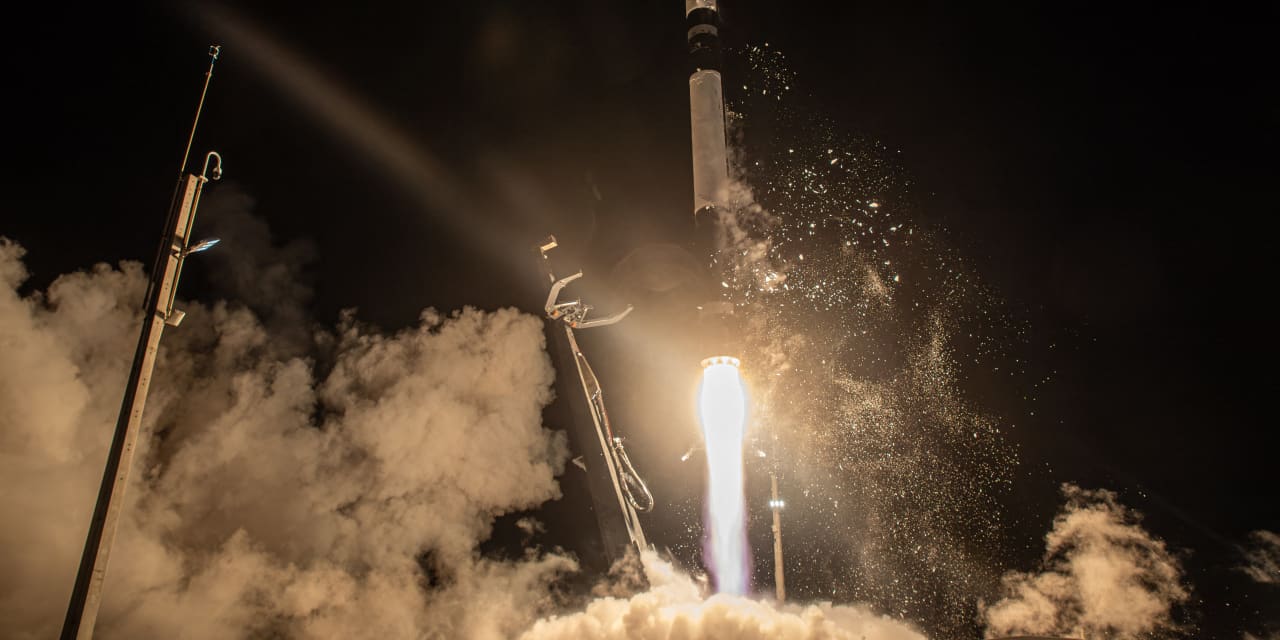
Among publicly traded firms, Rocket Lab (RKLB) occupies a structurally advantaged position. While it lacks the scale of private incumbents, it has demonstrated consistent launch execution and, more importantly, has translated that capability into defense-linked satellite deployment contracts. These agreements do not merely provide revenue; they integrate Rocket Lab into institutional procurement cycles that reward repeat performance over experimentation.
By contrast, launch-focused narratives without institutional backing face an uphill battle. Capital intensity, thin margins, and competitive pressure from vertically integrated private operators compress the path to sustainable profitability.
The Future of Shopping? AI + Actual Humans.

AI has changed how consumers shop, but people still drive decisions. Levanta’s research shows affiliate and creator content continues to influence conversions, plus it now shapes the product recommendations AI delivers. Affiliate marketing isn’t being replaced by AI, it’s being amplified.
III. Satellites and Data: Recurring Revenue Separates
Survivors
The strongest commercial economics in space increasingly reside not in reaching orbit, but in what remains there. Satellite-based services generate recurring revenue through communications, imaging, and analytics rather than one-time events.
Planet Labs (PL) exemplifies this model. Its Earth observation business monetizes persistent data collection across defense, agriculture, and climate applications. Revenue durability comes not from headline missions, but from subscription-like analytics consumption. While growth is incremental rather than explosive, the model aligns with how institutional customers budget and renew services.
AST SpaceMobile (ASTS) represents a higher-risk but potentially higher-reward variant of this category. Its strategy hinges on space-based cellular connectivity integrated with terrestrial carriers. The critical distinction is not technological ambition, but commercial alignment. Multi-year partnerships with global telecom operators create a path to revenue that does not rely on consumer adoption alone. Execution risk remains significant, but the revenue model is at least structurally coherent.
IV. Exploration-Oriented Firms and the Cost of Optionality
Exploration-centric companies occupy a more precarious position. Intuitive Machines (LUNR) illustrates the tension. Its lunar missions and NASA CLPS contracts provide legitimacy and funding, but revenue remains episodic and mission-dependent. Technical failures, while not fatal, underscore the volatility inherent in exploration services.
These firms often trade on optionality rather than cash flow. In bullish environments, markets reward that optionality aggressively. Over time, however, the absence of recurring commercial demand limits re-rating potential unless exploration services translate into repeat institutional contracts.
V. Traditional Aerospace: Quiet Winners by Design
Legacy aerospace firms such as Lockheed Martin (LMT), Northrop Grumman (NOC), RTX Corp. (RTX), and GE Aerospace (GE) rarely feature in retail discussions of space stocks, yet they remain among the most consistent financial beneficiaries of space industrialization. Their advantages are not technological daring but procurement fluency, balance-sheet strength, and integration into defense budgets.
These firms capture space exposure indirectly through diversified programs that smooth earnings volatility. While they lack asymmetric upside narratives, they also avoid existential risk. In an industry defined by long timelines and regulatory gravity, this tradeoff increasingly favors incumbents.
VI. The Capital Market Reality
Public markets continue to price many space companies as growth stories rather than industrial systems. This disconnect creates periodic surges driven by momentum rather than fundamentals. Over time, however, capital intensity asserts itself. Firms unable to secure durable contracts or fund extended development cycles face dilution, restructuring, or obsolescence.
The winners will not be determined by who reaches space first, but by who remains solvent long enough to monetize it.
The space industry is not a single trade. It is an industrial sorting process. Companies aligned with institutional demand, recurring revenue, and capital endurance are positioned to survive and compound. Those reliant on spectacle, optionality, or near-term narrative momentum face structural headwinds.
For investors, the question is not whether space will grow. It already has. The question is which companies are built to endure the realities of scale, regulation, and time. In space, as in other industrial transitions, the eventual winners will look boring long before they look obvious.
—
Education, not investment advice.
Sources: